What Makes an English Program Actually Work? A Parent's Checklist for Grades 2–8
CW
Jeetesh Gulani
|March 3, 2026|6 min read
The right English program is one your child actually enjoys showing you.
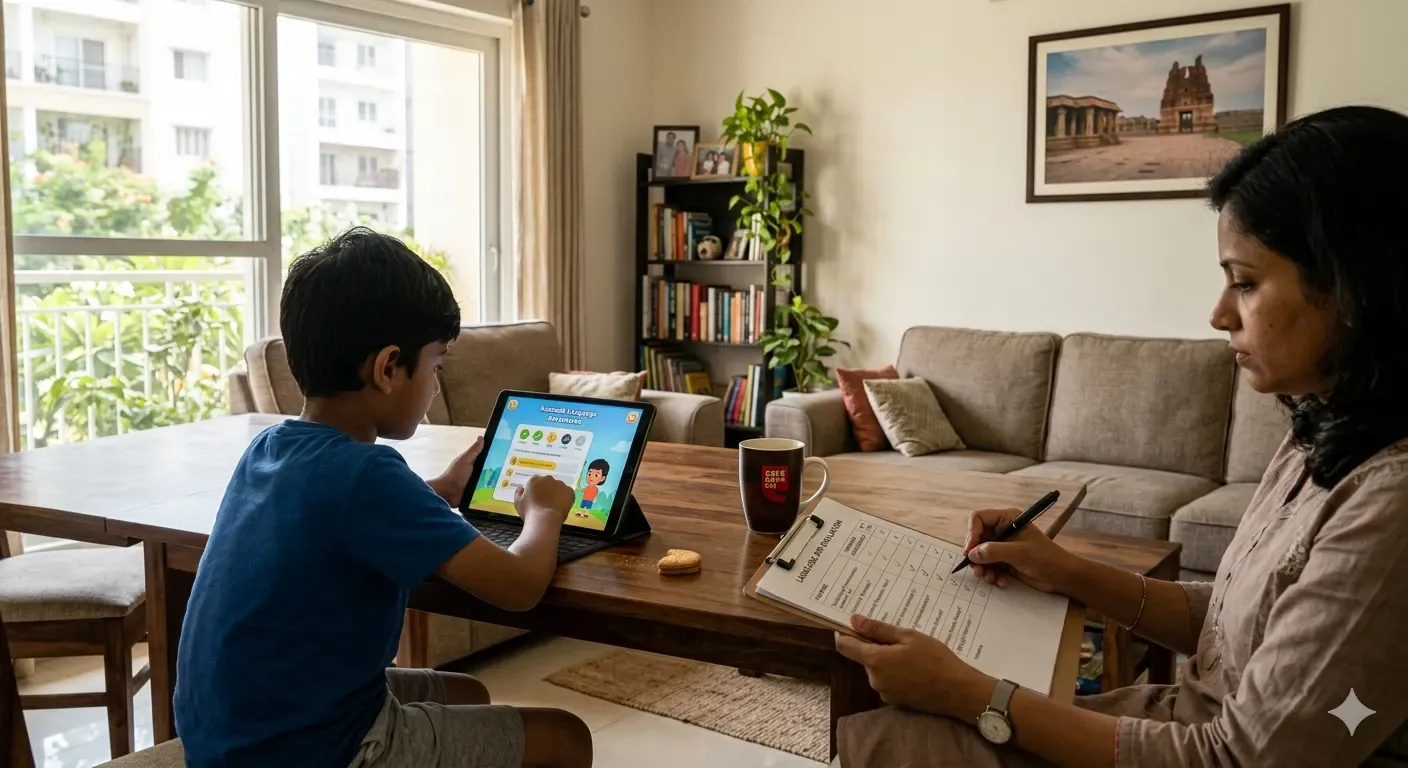
Finding the right English program for kids sounds easy, until you have tried an app, a workbook, and a tutor, and your child is still writing the same kinds of sentences six months later.
Most options look convincing on the surface: bright colors, friendly characters, glowing reviews, a tutor with a strong résumé. Your child starts, a few weeks pass, and then nothing changes. Their teacher still sends home the same feedback. Their essays still sound the same. They still freeze when asked to speak in front of the class.
This is not your child's fault, and it is not yours. Most English programs are built around what is easy to deliver: drills that are easy to score, homework help that fixes tonight's assignment, points that keep a child tapping. Very few are built around what actually makes a child better at English between grades 2 and 8.
What Schools Expect vs. What Most Programs Deliver
By 2nd or 3rd grade, most children have cracked the code of reading. They know how letters form sounds, how words form sentences. That milestone, called 'decoding', is what beginner literacy programs are built to teach.
But from grade 2 onward, school asks for something very different. Teachers are not just checking whether your child can read. They are asking: Can they explain what they read? Can they argue a point in writing? Can they present an idea without stumbling? Can they listen carefully and respond with precision?
These are communication skills, and they need different practice from the exercises most programs offer. A worksheet can check whether an answer is right. It cannot ask your child why, wait for the answer, and push back.
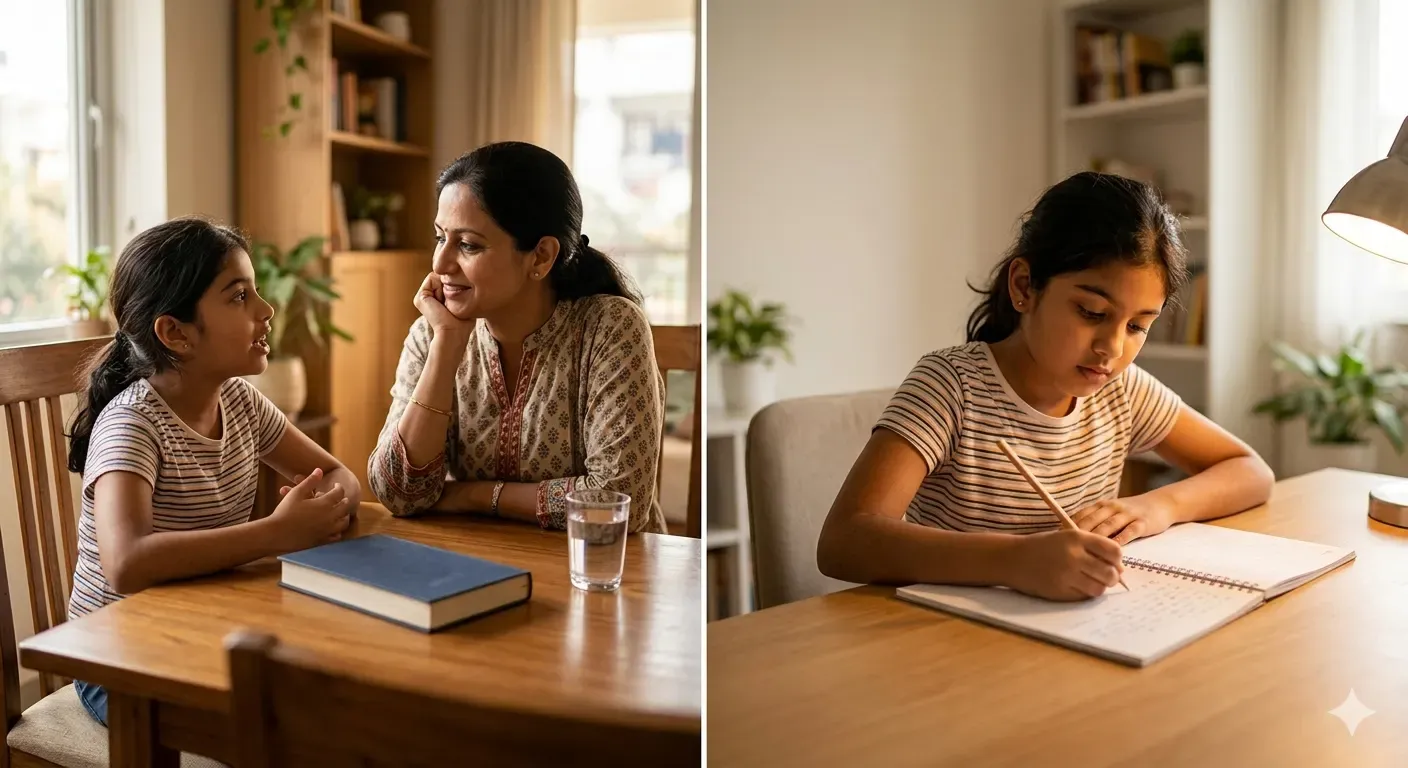
Speaking up in class is a skill, and skills need practice.
What Kids in Grades 2–8 Actually Need
Early literacy tools (like Khan Academy Kids, Duolingo ABC, and Lingokids) do an excellent job teaching letters, phonics, and early reading. If your child is in kindergarten or 1st grade, those tools are genuinely valuable.
Once your child reads fluently on their own, the job changes. What they need now is regular, structured practice using English to think: retelling, explaining, arguing, and persuading, with someone who responds to what they actually said.
The Five Skills That Compound
Think of English communication as five skills that grow together:
✍️
Writing Depth
Moving from "I like dogs because they are fun" to a structured argument with supporting evidence.
🗣️
Spoken Fluency
Speaking confidently in complete sentences, without trailing off or searching for words.
📖
Active Vocabulary
Knowing not just what a word means, but when and how to use it.
🔍
Reading Inference
Understanding what a text implies, not only what it says.
👂
Listening Comprehension
Following multi-step information and responding accurately.
The 7-Point Checklist: What a Good English Program Must Do
Use this to evaluate any option you are considering. A strong program should answer yes to most of these.
1
Does it cover all five language skills, not just one?
Vocabulary alone is not English. Reading alone is not English. All five skills need to be in the mix.
2
Does it give feedback specific enough to act on?
Not stars. Not "great job." Actual notes, for example:this sentence is unclear because, or try a stronger verb here.The best feedback often arrives as a question that makes your child find the fix themselves.
3
Does it start from where your child actually is?
Grade level is a starting guess, not a placement. A good program assesses your child first, sets the level from what it finds, and moves up as they improve.
4
Does your child do most of the thinking and talking?
If the adult or the app does the explaining and your child does the nodding, very little is being built. Look for a program where your child speaks, writes, and reasons out loud far more than they listen.
5
Can you, as the parent, actually see what is improving?
Skill-by-skill progress, regular summaries, and a way to talk to whoever is teaching, not just a minutes-used counter.
6
Is there a clear goal your child is working toward?
A presentation, a performance, a finished piece of writing. Practice with no destination tends to drift.
7
Can you stop if it is not working?
Short commitments, clear refund terms, and the option to change teachers all matter. A program that is confident in its results does not need to lock you in for a year.
How to Use This Checklist
1
Run every option against all seven points.
Read the program's own pages and recent parent reviews, and wherever possible, watch a session yourself. Marketing pages rarely show you what the feedback actually sounds like.
2
Filter by your child's specific gap.
If speaking is the main struggle, weight points 1, 4, and 6 most heavily. If writing is the issue, points 1, 2, and 3 matter most. Be specific about what you are trying to fix. An all-round program is only worth paying for if your child actually needs all-round support.
3
Use the trial or first session intentionally.
Most programs offer a free trial, a sample lesson, or an assessment. Sit in on it. Listen to what the feedback actually says. Then ask yourself: did I learn something about my child that I did not already know?
Sit in on one session and see what the feedback actually says.
Cueword is an English communication program for grades 2–8, built for all-round English skill development with real, specific feedback.
If you want to test one program against this list, Cueword offers a free 50-minute evaluation: a one-on-one conversation covering all five skills, with a same-day report and no credit card needed.
Not Ready to Sign Up for Anything Yet?Try These Two Things Tonight
If you want to understand your child's actual English gap before committing to any program, two quick exercises take less than 10 minutes each. What they reveal will make you a much sharper judge of what your child needs, and the confidence to choose what really helps them grow.
Ten minutes tonight can show you exactly where your child’s gap is.
The 3-Minute Retelling Test
Read a short paragraph aloud together from a book they already know. Then ask them to tell you, in their own words, what it meant. Don't prompt. Just listen. Are they summarizing facts or drawing inferences? Are they using vocabulary from the passage or defaulting to simpler words? Are they speaking in complete sentences or trailing off? The answers point directly to the skill gap.
The Opinion Writing Prompt
Give them one sentence to respond to: "What is one thing you would change about your school, and why?" Read what they write, not for grammar, but for whether they can support a point with a reason. This is the skill that separates 3rd grade writing from 5th grade writing, and it is one that drill-based practice rarely addresses.
Frequently Asked Questions
What is the most important thing to look for in an English program for kids?▼
Specific, actionable feedback, not stars or badges. A program that tells your childwhy something is wrong, or better, asks the question that helps them see it, is doing real teaching. One that just marks answers right or wrong is doing the work of a worksheet. For grades 2–8, this difference is what decides whether your child actually improves over time.
Is Duolingo good for kids learning English in grades 2–8?▼
It is a solid vocabulary and habit-building tool, but it was not designed to develop writing, speaking fluency, or reading inference for school-age kids. For children who need to grow their communication skills and not just their word list, it works best as a supplement alongside a more complete program, not as the main one.
Is an app, a tutor, or a live class better?▼
Each solves a different problem. Apps are good for low-cost, self-paced repetition, especially vocabulary. A tutor is good for help with specific schoolwork. A structured live class is built for skills that need a responsive person, such as speaking, explaining, and writing with evidence. Run each option against the checklist: the right answer depends on your child's gap.
How much time should my child spend on English practice each week?▼
Consistency matters more than duration. Two or three focused sessions a week, plus a few minutes of practice at home, usually does more than one long session. Whatever you choose, look for a defined session length and a clear end point.
What grade level should an English program target?▼
Early literacy programs are mostly designed for kindergarten through 1st or 2nd grade. Once your child reads fluently, look for programs built for the grades 2–8 range, where the focus shifts from learning to read to using reading, writing, and speaking as tools for thinking. The content, the feedback, and the skill scope should all reflect that shift.
Real progress needs a real coach
See where your child's English stands — book a free 50-minute 1:1 evaluation with a Cueword coach.
 Cueword