 Cueword
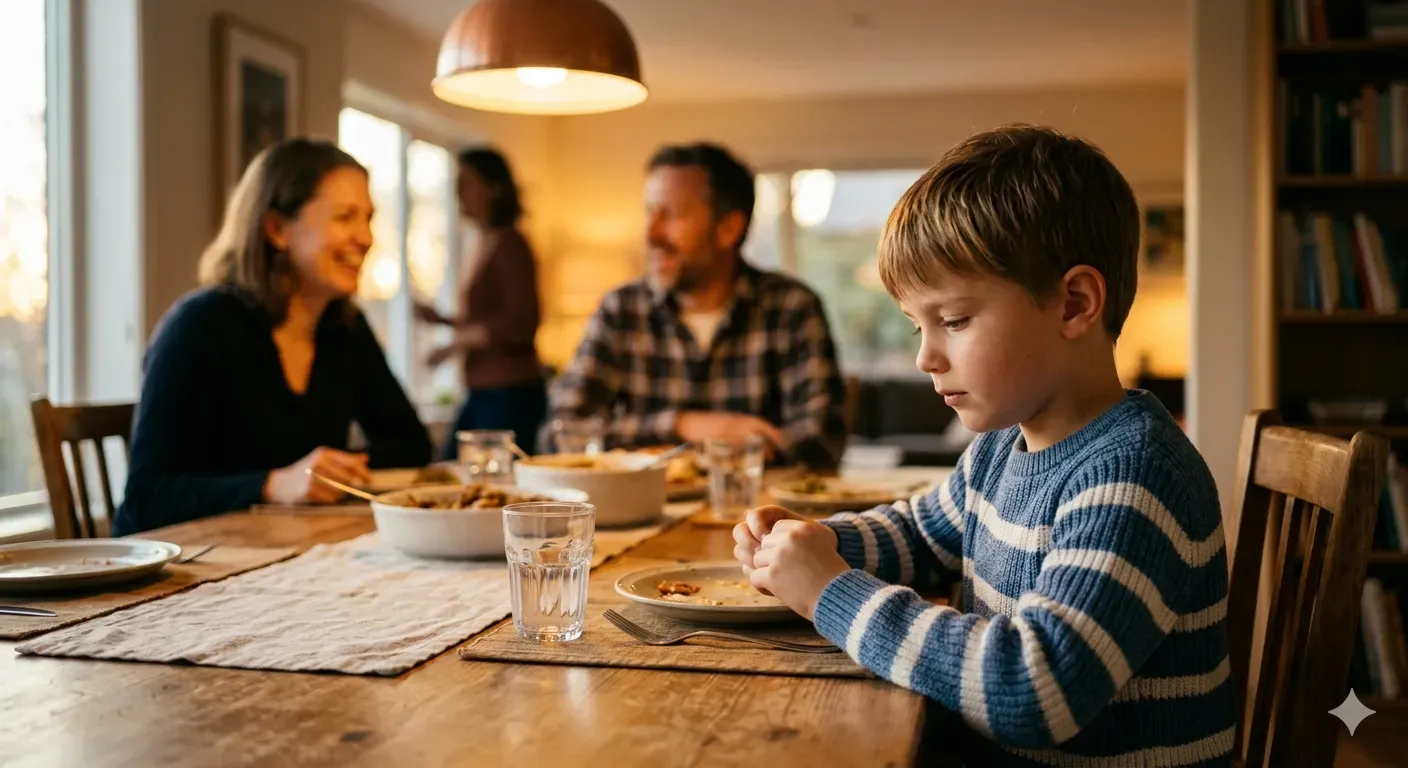
Some children are quiet. Not in need of fixing. Quiet. They observe before they speak. They think through answers before offering them. Building speaking skills for kids like these is less about correction and more about creating enough low-pressure repetitions that speaking starts to feel routine.
The problem shows up in one specific place: school. Teachers are required to assess spoken participation. Report cards come home with notes like "would benefit from contributing more in class discussions" or "hesitates to share ideas aloud." The child who processes carefully, who waits until they're sure, gets marked as disengaged, even when they understand every word.
The eight strategies below are not designed to turn a quiet child into a talker. They are designed to give a quiet child enough practice in safe settings that the high-stakes moments, class discussions, presentations, group work, feel less unfamiliar when they arrive.
The 8 Strategies
Ask everyone at the table — adults included — to share one thing that happened that day that the rest of the table doesn't know about. One sentence. No follow-up required unless they want to.
The key is that parents go first, and that the rule is genuinely one sentence. Quiet children often freeze because they don't know how much they're expected to say. Capping it at one sentence removes that uncertainty entirely. Over time, sentences tend to expand naturally without anyone asking them to.
Side-by-side seating removes the most intimidating part of conversation for quiet children: being watched. In a car, no one is making eye contact. The conversation also has a built-in end point when you arrive.
Give your child a question before you start: If you could change one thing about how school works, what would it be? Or: What's something you understand really well that most people your age probably don't? These questions have no wrong answer. They invite reasoning, not recall.

Would you rather have the ability to speak every language or play every instrument? Would you rather be really funny or really wise?
These questions have two features that matter: there's no wrong answer, and they require a reason. Follow every choice with why? Not as a challenge, but as genuine curiosity. The child who freezes when asked to share an opinion in class often speaks confidently about hypotheticals because the stakes are zero and the reasoning is entirely their own.
Ask your child to explain something they know well: a game they play, a book series they love, a YouTube topic they follow. Tell them you genuinely don't know, and ask them to explain it from the beginning. Then actually listen. Ask follow-up questions. Let them correct you when you misunderstand.
Quiet children are often reluctant speakers not because they have nothing to say, but because they don't feel certain enough to say it in front of others. Speaking from mastery changes that entirely. The child who won't volunteer an answer in class will talk for twenty minutes about Minecraft mechanics without hesitation.
One person starts a story with a single sentence: There was once a librarian who discovered that every book in her library was lying. The next person adds one sentence. Continue until someone ends it.
The collaborative structure removes individual ownership of the story's quality. Your child can't 'fail' at their sentence. They're just adding a piece to something already in motion. Silliness is not only allowed, it's encouraged.
Ask your child to read a few pages of whatever they're currently reading, aloud, to themselves. Not to practice reading. To practice the sound of their own voice filling a space.
Many quiet children are genuinely uncomfortable with how they sound when speaking. Reading aloud in private familiarizes them with that sound in a zero-pressure environment.
Set a timer for 30 seconds. Give your child a topic, it can be anything, including things they find slightly boring. Their job is to keep talking until the timer goes off. No pausing for more than two seconds. No waiting until they have the right words.
This one is deliberately awkward at first. The point is that getting through the awkwardness, continuing to speak even when they've run out of easy things to say, is the skill itself. Quiet children often stop talking because they hit a moment of uncertainty and interpret it as a signal to stop. This exercise trains them to push through that moment.
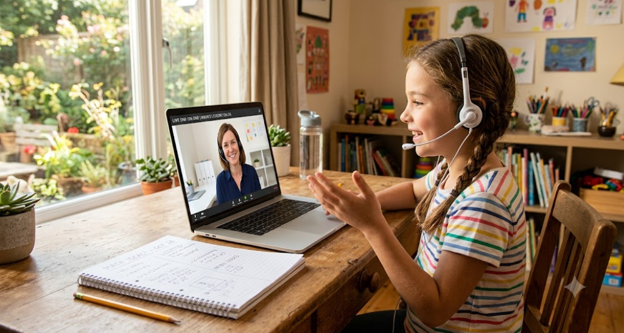
Some quiet children speak most easily to a single, familiar adult who isn’t a parent. A one-on-one class with the same coach every session gives them exactly that: an audience of one, and a predictable one.
This is how Cueword’s live classes work. Your child meets the same coach twice a week, all term. The coach cues rather than tells: they ask the right question and then wait, so your child works it out and does most of the talking, retelling a story, explaining their thinking, giving a view in full sentences. Each term ends in a Showcase your child writes and performs in front of you, so the step up to a bigger audience comes after weeks of practice, not before.
Speaking Skills for Kids Take Root at Home First
The classroom is the highest-stakes speaking environment in your child's week. It has the largest audience, the most evaluation, and the least control over when speaking is required. It will be the last place a quiet child feels confident, not the first.
Home is where the foundation gets built. The strategies above work because they lower the stakes to near zero, which is the condition quiet children need to build the habit of speaking through uncertainty. That habit travels. It shows up in family conversations first, then with familiar adults, then gradually in lower-stakes school moments before it reaches whole-class participation.
If your child is holding their own at the dinner table more than they were a month ago, that is not a small sign. That is exactly how this works.
Cueword offers a free 50-minute evaluation: one-on-one, not a test, with the Cueword Report and a recommended plan the same day. Live 1:1 English Communication classes for grades 2–8
Book a free evaluation →Frequently Asked Questions
Real progress needs a real coach
See where your child's English stands — book a free 50-minute 1:1 evaluation with a Cueword coach.
Get Started →